Mid-century modern homes have never been more sought after — and the Seattle–Eastside area has a genuine concentration of them worth knowing about.
Built primarily between the late 1950s and early 1970s, these homes offer something new construction can't replicate: architect-designed spaces with clerestory windows, post-and-beam construction, flat or low-pitched roofs, and a deep connection between indoor and outdoor living that feels particularly at home in the Pacific Northwest landscape.
But buying a mid-century modern home requires specific knowledge that goes beyond the standard buyer checklist. Here's what you need to know.
Where MCM homes are concentrated on the Eastside
The Eastside built substantially during the MCM era, and several neighborhoods have the highest concentration of authentic mid-century properties:
Bellevue — West Bellevue and Somerset West Bellevue has some of the most architecturally significant MCM homes in the region — lakefront properties and hillside homes designed by notable Pacific Northwest architects during the postwar boom. Somerset also has a solid inventory of 1960s–70s ranches and split-levels with MCM detailing.
Kirkland — Bridle Trails and Rose Hill This area developed heavily in the 1960s and 70s, and many homes retain their original MCM character: low-pitched roofs, clerestory windows, natural wood finishes, and large lot sizes that suited the era's relationship between home and landscape.
Medina Some of the Eastside's most significant architectural MCM properties are in Medina — though these are in the multi-million dollar range and represent the premium end of the MCM market.
Mercer Island Technically not on the Eastside but worth mentioning: Mercer Island has a significant concentration of architecturally notable MCM homes, particularly in its hillside and waterfront neighborhoods.
Seattle — Laurelhurst, Windermere, View Ridge For buyers open to Seattle proper, these northeast Seattle neighborhoods developed during the MCM era and have meaningful inventory of original and updated mid-century homes.
What makes a home authentically mid-century modern
Not every home built in the 1960s is a mid-century modern. True MCM architecture has specific characteristics:
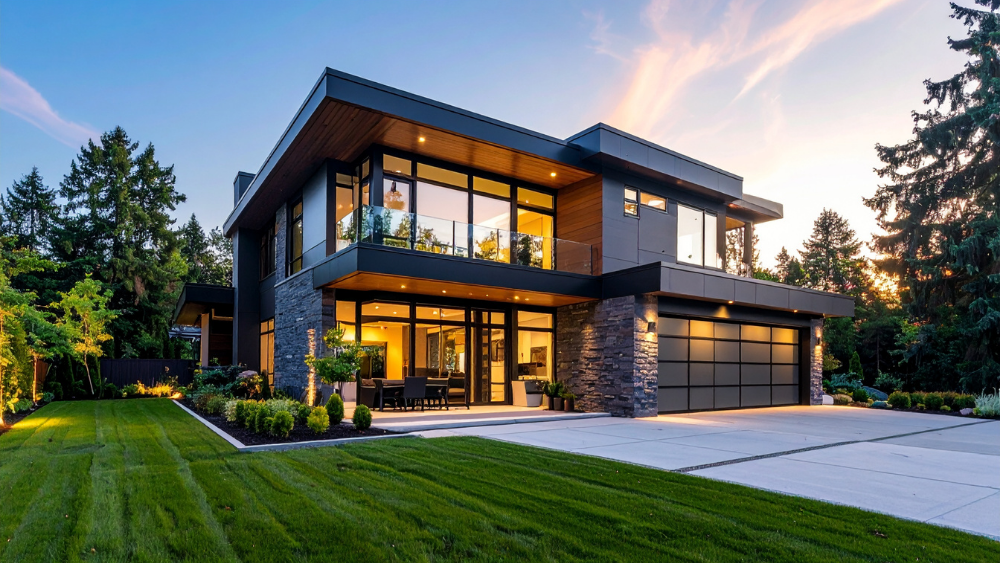
Flat or low-pitched roofs — often with broad overhangs to manage the Pacific Northwest rain while allowing light in Post-and-beam construction — structural elements that are often exposed, creating the open feel of the interior Floor-to-ceiling or clerestory windows — bringing the outdoors in, a signature of the MCM philosophy Open floor plans — flowing spaces without the compartmentalized room structure of earlier eras Integration with the site — MCM homes were designed to sit in their landscape, not on top of it. Many incorporate the grade, mature trees, or views as design elements Natural materials — wood, stone, and brick used prominently, often with minimal embellishment
Homes marketed as "mid-century modern" sometimes have only cosmetic MCM touches — updated kitchens with MCM-style cabinets, for example — on an otherwise conventional structure. Authentic MCM construction is visible in the bones of the home.
What to inspect carefully in an MCM home
This is where MCM buyers need specific knowledge. The architectural features that make these homes beautiful also create maintenance and structural considerations that differ from conventional construction.
Flat roofs Flat roofs are a signature MCM element and one of the most important inspection items. Flat roofs drain differently than pitched roofs and are more prone to water intrusion if not properly maintained. Ask for the roof's maintenance history, the age of the current roofing membrane, and any history of leaks. Budget for eventual re-roofing — flat roof systems typically have a 15–25 year lifespan depending on material and maintenance.
Post-and-beam structural systems The open floor plans of MCM homes are made possible by post-and-beam construction — structural loads carried by posts and beams rather than load-bearing walls. Have a structural engineer review any MCM home with unusual spans, sagging, or evidence of modification. Well-maintained post-and-beam structures are very durable; poorly maintained or improperly modified ones can have serious structural issues.
Original single-pane windows Many authentic MCM homes have original single-pane glass — beautiful, but thermally inefficient by modern standards. Replacement with double-pane units sized to the original openings is common and improves energy performance significantly. Budget for this if the home still has original glazing.
Electrical and plumbing Homes built in the 1950s–70s may have original electrical panels (knob-and-tube or early breaker panels) and plumbing that's nearing the end of its service life. These are normal for the era and addressable — but factor replacement costs into your purchase analysis.
Insulation MCM construction often prioritized light and openness over insulation R-values. Original insulation may be minimal. Upgrading insulation — particularly in attic spaces and crawl spaces — improves comfort and energy efficiency significantly, but access can be complicated in homes designed without traditional attic spaces.
Buying vs. renovating: the MCM decision
MCM buyers face a spectrum of options:
Original, unrestored homes — The most affordable entry point, but typically requiring the most investment. Mechanical systems, roofing, windows, and kitchens may all need attention. The appeal is a genuinely authentic structure to restore on your own terms.
Partially updated homes — Kitchen or bath updates, new roofing, or mechanical upgrades have been done, but the home retains its original character. Often the best value combination of livability and authenticity.
Fully restored or architect-renovated homes — These have been updated comprehensively while preserving the MCM character. They command a premium, but deliver immediate livability. Worth the price for buyers who don't want a renovation project.
MCM-inspired new construction — Not true MCM, but homes built with MCM aesthetic principles using modern materials and systems. Lower maintenance, better energy performance, but no authentic architectural history.
Pricing MCM homes on the Eastside
Authentic MCM homes with strong architectural provenance, good maintenance, and desirable locations command a premium over conventional homes of similar size and age. The design and cultural cachet of genuine MCM architecture — particularly in a market with high-income, design-conscious tech buyers — drives demand that exceeds purely functional comparables.
What this means practically: an MCM ranch in West Bellevue with original character, updated systems, and a strong lot may sell for 10–20% above a conventional 1960s home of the same square footage in the same neighborhood. The premium is real and has been durable.
How Tribeca NW can help you find MCM homes
Not all Eastside inventory is on the MLS at any given moment. We have relationships across the brokerage community and can identify MCM properties before they list publicly — which matters in a segment where demand consistently outpaces supply.
We also know which homes have been thoughtfully preserved versus those with renovation challenges that aren't obvious from photos, and we can connect you with inspectors and structural engineers who specialize in MCM construction.
If you're looking for a mid-century modern home on the Eastside or in greater Seattle, we'd love to help you find the right one.
Connect with a Tribeca NW agent about MCM homes →
Houses for Sale in Seattle, WA
Houses for Sale in Kent, WA
Houses for Sale in Bothell, WA
Houses for Sale in Bellevue, WA
Tribeca NW Real Estate serves buyers across Bellevue, Kirkland, Redmond, Mercer Island, and the greater Seattle area. 1,508 homes closed. 800+ five-star reviews on Google and Zillow.
Check out this article next