Custom home construction on Seattle's Eastside runs roughly $400 to $1,500+ per square foot in 2026, and where you land in that range depends more on your lot and your architecture than on your finish selections.
Critically: those figures are construction only. Land is separate, and on the Eastside the lot is frequently the larger of the two numbers. A buildable Bellevue lot can cost more than the house you put on it.
The four tiers
| Tier | Per square foot | What that looks like |
|---|---|---|
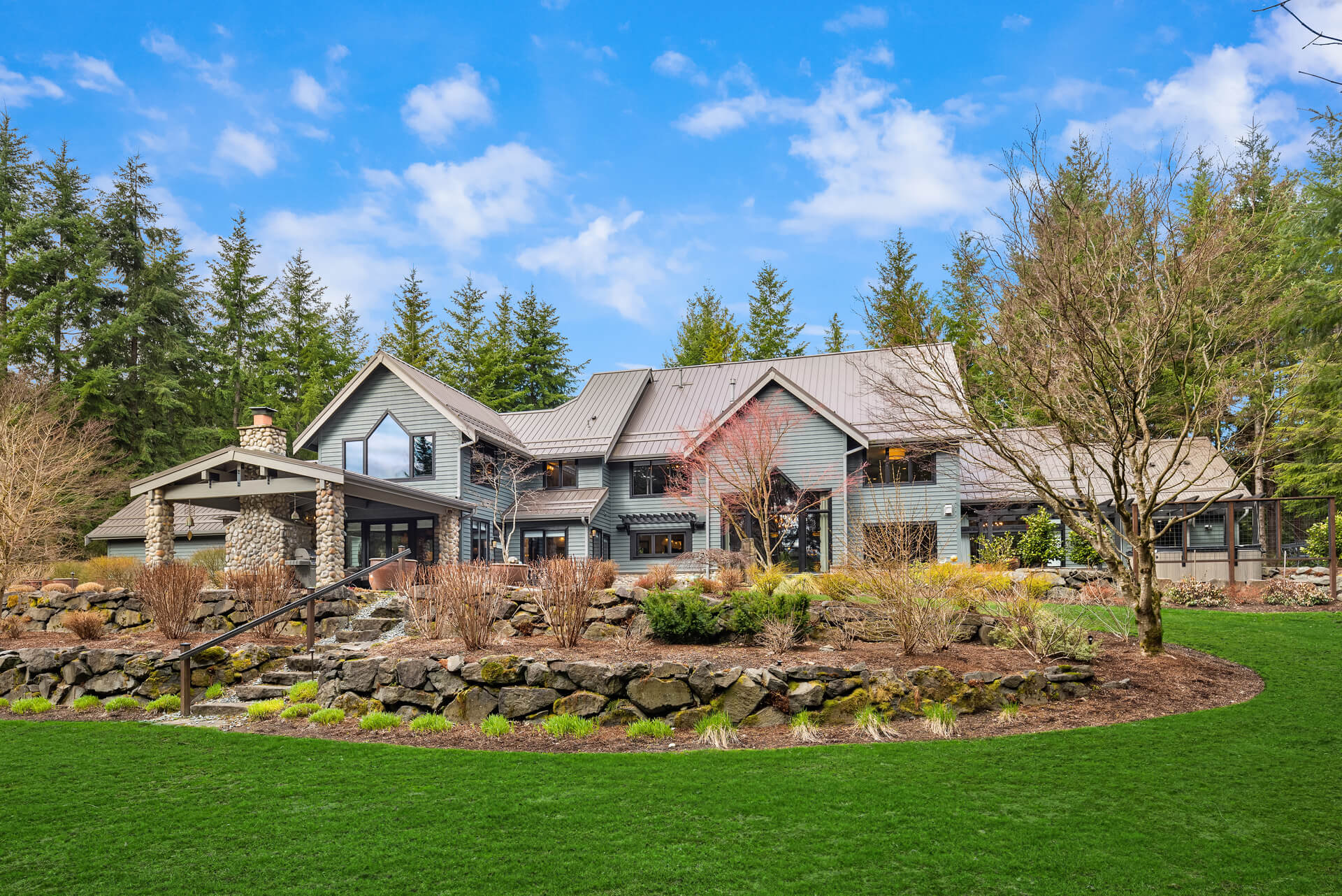
| Straightforward custom | $400–$600 | Flat accessible lot, simple roof lines, quality but not exotic finishes |
| Luxury | $600–$900 | More complex geometry, premium windows and millwork, better sitework |
| High-end / complex | $900–$1,200+ | Difficult site, significant engineering, large glass and steel systems |
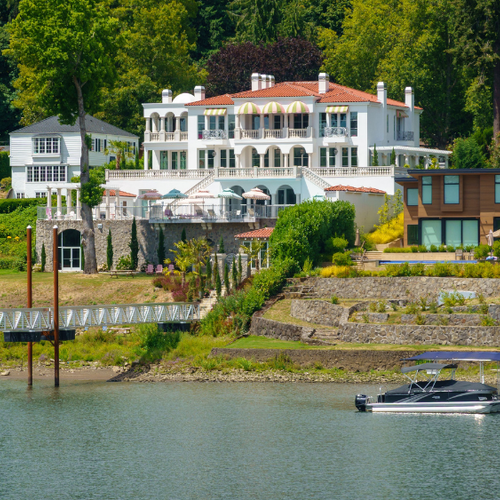
| Ultra-luxury estate | $1,200–$1,500+ | Waterfront or hillside, bespoke everything, elaborate outdoor living |
Run the arithmetic on a 4,500 square foot home and the spread is stark: roughly $2.7 million at the entry of the luxury tier to $5.4 million or more at the high end — for the same square footage, before land.
Treat these as planning ranges rather than quotes. Two builders pricing the same drawings can land 20% apart depending on what each includes.
What actually moves the number
The finish level is what most people focus on. The lot is what usually decides it.
Costs that drive the number up
The lot itself. Demolition of an existing structure, grading, drainage, retaining walls, utility upgrades, tree protection and difficult access all add cost before a single wall goes up. A sloped Bellevue lot with mature trees and a narrow driveway can add six figures in sitework alone.
Waterfront, hillside or view sites. These require more engineering, more complex foundations, shoreline review, and typically large glass or steel systems to capture the view you paid for. This is the single biggest driver on the Eastside, where the best lots are frequently the hardest ones.
Architectural complexity. Long spans, multiple roof lines, cantilevers, custom stairs and elevators all cost disproportionately. A simple rectangle is dramatically cheaper per square foot than the same area arranged in an interesting shape.
Finish level. Premium cabinetry, stone, windows, appliances and millwork. Real, but usually a smaller swing than people expect relative to site and structure.
Sitework and outdoor living. Driveways, pools, terraces, outdoor kitchens and landscape lighting. Frequently underbudgeted because they get decided late.
Permitting and delays. Extra review cycles, revisions, and stalled decisions all carry carrying costs while your construction loan accrues interest.
Costs that bring the number down
- A flat, accessible lot with utilities already at the street
- Clean, simple forms — efficient to frame, efficient to roof, efficient to finish
- Finish allowances set realistically at the start rather than discovered mid-build
- Bringing your builder in early, before the design locks in choices that are expensive to construct
That last one is the highest-leverage decision available to you. A builder reviewing schematic drawings can flag a $200,000 structural problem that costs nothing to redesign at that stage and a fortune to solve once permits are issued.
The costs that aren't in the per-square-foot number
Nearly every budget we see that goes badly wrong left these out:
- Land. Always separate. On the Eastside, often the dominant line item.
- Pre-construction. Architecture, structural engineering, survey, geotechnical review, arborist reports, permits and review fees.
- Builder management and sales tax, which in Washington applies to construction services.
- Contingency. 10–15% is realistic, more on a complex or older site. Projects that budget zero contingency are projects that will have a difficult conversation in month seven.
- Financing costs during construction — interest on a construction loan over 12 to 18 months at current rates is a meaningful number.
- Furnishings, landscaping and owner-selected items, which are routinely outside the builder's quoted scope.
A realistic all-in budget is typically 25–40% above the construction-only figure once land and soft costs are included.
Should you build or buy?
With Eastside resale softening — Bellevue's median is down 1.4%, Kirkland's down 4.1% — the arithmetic has shifted, and it's worth running honestly.
Building makes sense when no existing home can give you what you need, you have a specific lot you want, you can carry a 12–24 month timeline, and you're prepared to make several hundred decisions.
Buying makes sense when the existing inventory can get you most of the way there, you want cost certainty, you need to move on a timeline, or you'd rather spend your next eighteen months not managing a construction project.
The honest version: at current construction costs and current resale prices, building on the Eastside is frequently more expensive than buying a comparable existing home and renovating it. It's worth doing when you want something the market can't give you — not usually as a value play.
Frequently asked questions
How much does it cost per square foot to build a custom home on the Eastside? Roughly $400–$600 for a straightforward custom build, $600–$900 for luxury, $900–$1,200+ for high-end or complex sites, and $1,200–$1,500+ for ultra-luxury estates. All construction only, excluding land.
Does that include the land? No. Land is always separate, and on the Eastside a buildable lot frequently costs more than the construction itself. Budget them as two distinct numbers.
What's the biggest driver of cost? The lot, more often than the finishes. Slope, access, drainage, tree protection, utility connections and shoreline review can add six figures before framing begins. Architectural complexity is second.
How long does it take to build a custom home here? Typically 12 to 24 months of construction, plus 6 to 12 months of design and permitting beforehand. Jurisdictional review timelines vary significantly across Eastside cities.
Is it cheaper to build or to buy and renovate? At current construction costs and with Eastside resale prices softening, buying and renovating is frequently the less expensive path. Building wins when you want something the existing inventory genuinely can't provide.
How much contingency should I budget? 10–15% on a straightforward site, more on complex, sloped, waterfront or older sites. A budget with no contingency is a budget that hasn't met reality yet.
We know the lots and we know which builders deliver
The lot decision is where custom projects are won or lost, and it happens before you've hired an architect. We can tell you which Eastside parcels carry the site problems that don't show up until geotechnical review, and which builders price completely rather than low.
If you're weighing building against buying, we'll give you a straight comparison on both.
Schedule a consultation with a Tribeca NW agent →
Tribeca NW Real Estate serves buyers and sellers across Bellevue, Kirkland, Redmond, Issaquah, Bothell and the greater Seattle metro. 1,675 homes closed and $1B+ in transaction volume. 500+ five-star Google reviews and 375+ five-star Zillow reviews.
This article is general information, not construction or financial advice. Construction costs vary by site, builder and scope. Obtain detailed bids before budgeting.
Sources cited in this post:
Check out this article next