Seattle's neighborhoods don't just have different names — they have genuinely different characters, price points, and lifestyles. Ballard and Beacon Hill are four miles apart and feel like different cities. Capitol Hill and Queen Anne serve completely different buyers at completely different prices. Understanding these differences before you start making offers saves you months of touring the wrong homes in the wrong places.
This is an honest, current guide to the neighborhoods buyers actually choose — written from the perspective of people who've helped buyers find homes across all of them.
What to know before you start
Seattle's residential market in mid-2026 sits at a median single-family home price of approximately $900K–$1.1M depending on neighborhood. Condos run $450K–$800K in most areas. The market is active — well-priced homes in desirable neighborhoods still sell within 2–3 weeks.
Seattle is also meaningfully different from the Eastside (Bellevue, Kirkland, Redmond) in character, commute patterns, and lifestyle. If you're deciding between Seattle and the Eastside, that's a different decision than choosing between Seattle neighborhoods. This guide focuses on Seattle proper.
Ballard — the neighborhood that feels like a small town
Price range: Single-family $900K–$1.5M | Condos $450K–$750K Best for: Buyers who want walkable neighborhood energy with a genuine community feel
Ballard was a Scandinavian fishing community before Seattle annexed it in 1907, and the maritime history still shows — in the Hiram Chittenden Locks, Salmon Bay, and the Nordic Museum. Today it's one of Seattle's most desirable neighborhoods, with a thriving commercial strip along Ballard Avenue and NW Market Street, a year-round Sunday farmers market, and a brewery scene that draws people from across the city.
What it actually feels like: lively but not overwhelming. You recognize the faces at your coffee shop. The Sunday market vendors know you. There's a neighborhood energy that feels earned rather than curated. More residential than Capitol Hill, more established than South Lake Union.
The housing stock is a mix of original craftsman bungalows (the best of which are genuinely beautiful), newer condos and apartments, and a growing townhome inventory. Well-maintained craftsmans command a significant premium.
Capitol Hill — urban density at its best
Price range: Single-family $950K–$1.5M+ | Condos $450K–$800K Best for: Buyers who want maximum walkability and urban energy
Capitol Hill is Seattle's most urban residential neighborhood — dense, walkable, and the cultural heart of the city's arts, nightlife, and LGBTQ+ community. Broadway, Pike/Pine, and 15th Avenue form the commercial backbone, with independent restaurants, coffee shops, bars, and live music venues that keep the neighborhood active at all hours.
What it actually feels like: energetic and never quiet. The kind of place where you can walk out your door for dinner at midnight or find a bookstore open at 9pm. Weekend activity is constant. Light rail connects directly to downtown, the airport, and soon the Eastside.
Most buyers in Capitol Hill are condo buyers — single-family homes exist but are limited and expensive. Best for professionals without space requirements who want maximum urban access.
Queen Anne — Seattle's most established residential neighborhood
Price range: Single-family $1.2M–$3M+ | Condos/townhomes $600K–$1.1M Best for: Buyers who want space, views, and a neighborhood that's been around long enough to have real character
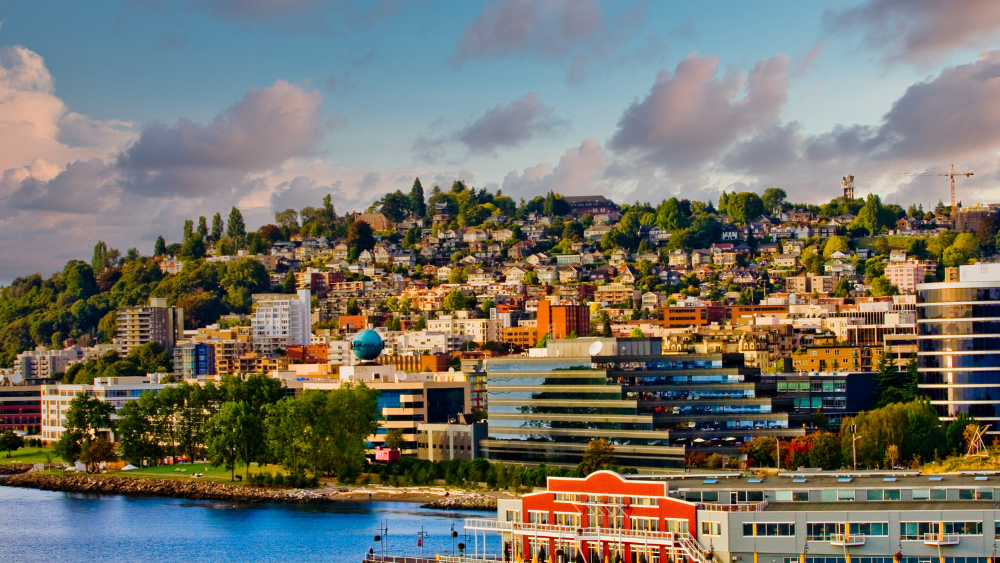
Queen Anne sits on a hill with views of the Space Needle, Elliott Bay, Lake Union, and the Cascades from the upper portions. It has a distinctly different energy from younger, denser neighborhoods — quieter, more residential, with larger homes and a community that's been here for generations.
What it actually feels like: a neighborhood where people stay for decades. More walkable commercially than most Seattle neighborhoods at Queen Anne Avenue's core, with genuine anchor businesses — a hardware store, a community pharmacy, restaurants that have been there for 20+ years. Stroller-friendly in a way Capitol Hill isn't.
The housing stock is some of Seattle's best — craftsmans, colonials, and Tudor revivals from the early 20th century on the upper slopes. Views from the north and west slopes are exceptional.
Fremont — the self-proclaimed center of the universe
Price range: Single-family $850K–$1.4M | Condos $400K–$700K Best for: Buyers who want neighborhood character and community identity with good outdoor access
Fremont takes its unofficial slogan seriously. The neighborhood has a genuine quirky identity — the Fremont Troll public art installation under the Aurora Bridge, the Sunday flea market, a summer solstice parade. The Google Seattle campus has shifted the demographic somewhat while preserving the neighborhood's essential character.
What it actually feels like: eclectic, community-oriented, and surprisingly peaceful for its central location. The Burke-Gilman Trail runs through Fremont, connecting to the UW, Kirkland, and eventually the Eastside. Lake Union is accessible on foot.
Good choice for buyers who want neighborhood identity and outdoor access without Capitol Hill's density.
Green Lake — built around a two-mile loop
Price range: Single-family $900K–$1.6M | Condos $400K–$700K Best for: Buyers who prioritize outdoor lifestyle and community character
Green Lake is organized around a 2.8-mile paved loop trail — one of the most-used urban parks in Washington State. The neighborhood character follows: active, outdoor-focused, and community-oriented in the way that only a neighborhood with a literal gathering space at its center can be.
What it actually feels like: healthier than average. On any given morning, the lake loop has hundreds of runners, cyclists, and walkers. The surrounding streets have excellent coffee shops, restaurants, and retail. Consistently pleasant to walk around.
The housing stock is predominantly well-maintained craftsman bungalows with some newer construction and condos along the commercial corridors.
West Seattle — the neighborhood that feels like leaving Seattle
Price range: Single-family $750K–$1.4M | Condos/townhomes $400K–$700K Best for: Buyers who want waterfront proximity, strong community identity, and relative value
West Seattle is separated from the rest of the city by the Duwamish Waterway — you cross a bridge to get there, and that separation creates a genuine community identity. The Alaska Junction commercial area has the feel of a small town's main street. Alki Beach is a 2.5-mile stretch of Puget Sound waterfront with no direct equivalent elsewhere in Seattle.
What it actually feels like: a small beach town that happens to be 15 minutes from downtown. Residents tend to stay for a long time and are fiercely loyal to the neighborhood.
One of Seattle's best value propositions for buyers who want outdoor access and community identity at a price point meaningfully below Ballard or Queen Anne.
Columbia City / Rainier Valley — Seattle's most undervalued market
Price range: Single-family $700K–$1.1M | Condos $350K–$550K Best for: Buyers who value cultural diversity, light rail access, and relative affordability
Columbia City and the Rainier Valley are Seattle's most culturally diverse neighborhoods — and some of its most significantly undervalued real estate. The light rail runs through the area, connecting directly to downtown Seattle, Capitol Hill, and SeaTac Airport. The restaurant scene is excellent and genuinely reflects the neighborhood's multicultural character.
What it actually feels like: authentic in the way that only neighborhoods not yet fully gentrified feel. The Columbia City Farmers Market is beloved across the city. Light rail connectivity is exceptional.
For buyers who value cultural diversity, neighborhood authenticity, and relative affordability — and are willing to look south of the city's traditional desirable corridors — Columbia City and Beacon Hill consistently punch above their reputation.
Laurelhurst — Seattle's quietest premium address
Price range: Single-family $1.5M–$4M+ Best for: Buyers who want Lake Washington access, space, and a genuinely private residential setting
Laurelhurst is tucked between the UW campus and Lake Washington's western shore, with a feel that's more enclave than neighborhood. Quiet streets, large lots, beautiful homes, and Lake Washington frontage for residents lucky enough to have it.
One of the few Seattle neighborhoods where you can walk to Lake Washington's shore. The Laurelhurst Community Center and beach club are neighborhood anchors. Less commercially walkable than Ballard or Capitol Hill, but the tradeoff is space, quiet, and one of Seattle's best residential settings.
The decision framework
Choose Capitol Hill or Fremont if urban walkability and neighborhood energy are your primary drivers and space is secondary.
Choose Queen Anne or Laurelhurst if you want Seattle's best residential character, space, and views — and budget allows.
Choose Ballard or Green Lake if you want a genuine neighborhood community feel with good outdoor access and commercial amenities.
Choose West Seattle if waterfront proximity, community identity, and value matter more than central location.
Choose Columbia City if cultural diversity, light rail access, and value are your priorities and you're willing to be south of the traditional corridors.
We help buyers find the right Seattle neighborhood
The right neighborhood is the one that fits your actual daily life. At Tribeca NW, we work with buyers across all of Seattle's neighborhoods and can help you figure out which ones deserve your attention based on your specific situation.
Talk to a Tribeca NW agent about Seattle neighborhoods →
Related reading: Seattle vs. Bellevue — which is right for you? → | How to choose the right Seattle suburb →
Tribeca NW Real Estate serves buyers and sellers across Seattle, Bellevue, Kirkland, Redmond, and the greater metro area. 1,508 homes closed. 800+ five-star reviews on Google and Zillow.
Check out this article next